Healthcare Technology9 min read

AI Agents for Clinics: Affordable Automation for Small Practices

AI agents are not just for large hospitals. Learn how small clinics can implement affordable AI automation to compete with larger healthcare providers.

B

Bot MD Team

Healthcare AI Experts January 5, 2026

Clinic AutomationSmall PracticeAI AgentsAffordable Healthcare Tech
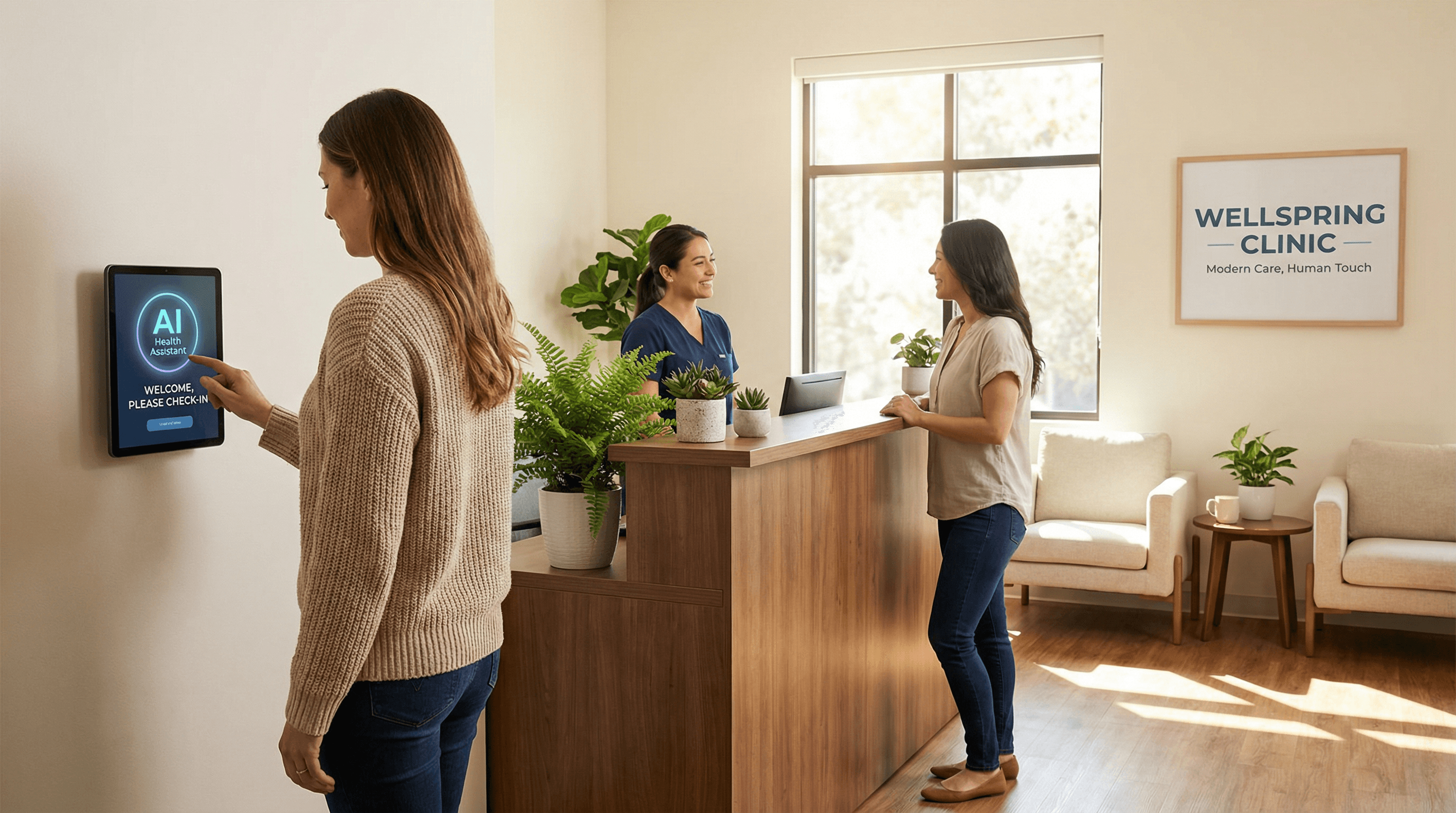
Small clinic reception using AI agent for patient scheduling

AI Agents for Clinics: Affordable Automation for Small Practices

Dr. Mei runs a busy pediatric clinic in Penang. Three doctors, two receptionists, a nurse. Most days, she barely has time to eat lunch.

"I spent six years in medical school," she told me, "and half my day is answering 'What time do you close?' and chasing parents for vaccination appointments."

Her receptionists were drowning. The phone never stopped. Parents would call during lunch breaks—the only time many could call—and get put on hold. Some gave up. Some went to competing clinics. The ones who got through often just wanted to reschedule, which took 5 minutes for something that should take 30 seconds.

Then Dr. Mei tried something new.

The Night Everything Changed

On the Monday after implementing an AI agent, Dr. Mei arrived to find 12 appointments already booked. Not carried over from Friday—booked overnight. At 11 PM, 2 AM, 6 AM. Parents booking vaccination appointments while their kids slept.

"I stared at the screen for a full minute," she said. "We'd never had 12 morning bookings before 8 AM."

By the end of the first month:

  • Her no-show rate dropped from 24% to 11%
  • Call volume fell by 60%
  • One receptionist moved to part-time (by choice—she wanted to spend more time with her own kids)
  • Net revenue increased $3,400/month

Here's what actually happened.

The Real Problems Small Clinics Face

Before we talk solutions, let's be honest about the challenges:

You're understaffed by design. A small clinic can't afford five receptionists. You make do with one or two, which means someone is always overwhelmed.

Phone systems were designed for another era. Patients call during business hours because that's when you're open. But business hours are also when they're at work. So they call during lunch. All of them. At once.

Every missed call is a missed patient. Studies show 60% of patients who can't reach you won't call back. They'll just Google the next clinic.

After-hours is a black hole. Your website says "Call to book." After 6 PM, nobody answers. That potential patient moves on.

Admin work steals clinical time. Every minute your receptionist spends on scheduling is a minute they're not helping with actual patient care.

Sound familiar?

What AI Agents Actually Do for Small Clinics

Forget the buzzwords. Here's what happens in practice:

Scenario 1: The Midnight Booking

11:47 PM, Tuesday

Mrs. Wong's toddler just threw up. She's worried it might be something serious, but not emergency-room serious. She wants to see the pediatrician first thing tomorrow.

She opens WhatsApp, finds the clinic's business number, and types: "My 2-year-old has been vomiting. Can I see Dr. Mei tomorrow?"

Within 10 seconds:

"Hi Mrs. Wong! I'm sorry to hear your little one isn't feeling well. Dr. Mei has availability tomorrow at 8:30 AM, 10:15 AM, and 2:45 PM. Which works best for you?"

She picks 8:30 AM. The AI confirms, adds it to the schedule, sends her a calendar invite, and reminds her what to bring. Total time: 2 minutes.

Without AI: She'd have called at 8 AM when the clinic opens, waited on hold behind six other parents, and maybe gotten a 4 PM slot—or worse, given up and gone elsewhere.

Scenario 2: The Reminder That Saved an Appointment

48 hours before Mr. Lee's dental cleaning

The AI sends a WhatsApp message:

"Hi Mr. Lee! This is a reminder that you have a dental cleaning appointment with Dr. Tan on Thursday at 3 PM. Reply YES to confirm, or RESCHEDULE if you need to change."

Mr. Lee had completely forgotten. He was supposed to be in a meeting at 3 PM. He replies "RESCHEDULE."

The AI shows him available slots. He picks Friday at 10 AM. Done.

Without AI: Mr. Lee would have no-showed. The clinic would have an empty slot. Someone on the waitlist would have missed the opportunity to take it.

Scenario 3: The FAQ Flood

12:15 PM, Monday

The phone is ringing nonstop. Three people are on hold. One caller just wants to know: "Do you accept my insurance?"

In a traditional clinic, a receptionist answers, looks up the insurance, and spends 3 minutes on a call that delivers zero revenue.

With AI: That patient sends a WhatsApp message, gets an instant answer, and either books an appointment or moves on. No hold time. No receptionist time. No frustration.

One clinic tracked this: 65% of their incoming calls were questions AI could answer instantly. Imagine getting 65% of your time back.

Scenario 4: The Post-Visit Follow-Up

2 days after a procedure

The AI messages automatically:

"Hi Mrs. Chen! This is Dr. Mei's clinic checking in after your procedure on Monday. How are you feeling? Any concerns with pain, swelling, or recovery?"

Mrs. Chen responds that she's doing well but has a question about her medication.

The AI either answers directly (if it's a common question) or escalates to a human. Either way, the patient feels cared for—and the clinic catches potential issues early.

Without AI: No follow-up. The clinic hopes everything is fine. If there's a problem, they don't hear about it until it's bigger.

The Math That Convinced Dr. Mei

Dr. Mei is a scientist. She wanted numbers, not promises. Here's what we calculated:

Current State:

  • Monthly no-shows: 45 (at 24% rate)
  • Average appointment value: $80
  • Monthly loss from no-shows: $3,600
  • After-hours inquiries lost: ~30/month
  • Estimated lost revenue: $2,400/month

After AI Implementation:

  • No-show reduction: 50% (45 → 22 no-shows)
  • Recovered revenue: $1,840/month
  • After-hours bookings captured: 15/month
  • New revenue: $1,200/month
  • Staff time saved: 20 hours/month
  • Value of saved time: $400/month

Total Monthly Benefit: $3,440 AI Platform Cost: $300/month Net Monthly Gain: $3,140

ROI: Over 1,000%. And that's conservative.

"But I Can't Afford Enterprise Software"

Here's the thing: you don't need enterprise software.

The AI platforms designed for small clinics cost $200-500/month. That's less than a part-time receptionist. Less than the revenue lost to a handful of no-shows. Less than the cost of losing patients to competitors who answer faster.

And unlike hiring someone, AI doesn't need:

  • Training time
  • Sick days
  • Benefits
  • Vacation coverage
  • Sleep

It just works. 24/7. 365 days a year.

The Implementation Reality for Small Practices

Let me be honest about what implementation looks like for a small clinic:

Week 1: Setup

  • Connect your WhatsApp Business number
  • Import your schedule availability
  • Configure basic appointment types
  • Test with a few messages

Total time investment: 2-3 hours. No IT department needed.

Week 2: Soft Launch

  • Tell a few trusted patients about WhatsApp booking
  • Monitor every conversation
  • Make adjustments based on real interactions
  • Keep phone booking as backup

Week 3-4: Expansion

  • Announce WhatsApp booking to all patients
  • Add reminders to existing workflow
  • Enable FAQ handling
  • Train staff on what AI handles vs. escalates

Month 2+: Optimization

  • Review analytics
  • Add more automation (intake forms, follow-ups)
  • Reduce phone hours if ready
  • Measure ROI

By month two, most clinics see the transformation Dr. Mei experienced.

What to Look For in a Platform

Not all AI platforms work for small clinics. Here's what matters:

Healthcare-specific: Generic chatbots don't understand medical contexts. You need something built for healthcare.

Easy setup: If it requires IT staff, it's not for you. Look for self-service configuration.

Reasonable pricing: Beware per-message fees that can balloon unpredictably. Look for simple monthly pricing.

Local support: When something goes wrong, can you reach someone in your timezone who speaks your language?

Integration: Does it connect to your practice management software, or will you be double-entering everything?

Real Results from Real Clinics

Here's what clinics like Dr. Mei's have achieved:

Family Medicine Practice (3 doctors, Kuala Lumpur)

  • 60% reduction in phone calls
  • 45% reduction in no-shows
  • $3,200/month net gain

Dental Clinic (2 dentists, Singapore)

  • 40 after-hours bookings per month (previously 0)
  • 15% increase in new patients
  • Receptionist reduced from full-time to part-time

Pediatric Clinic (2 doctors, Manila)

  • 83% vaccination appointment conversion from reminders
  • 35% improvement in follow-up compliance
  • Patient satisfaction up 28 points

The Question You Should Be Asking

The question isn't "Can my clinic afford AI?"

It's "Can my clinic afford to lose patients who can't reach you? To have empty slots from no-shows? To have staff answering the same questions 50 times a day?"

The clinics that adopt AI now will have a permanent advantage. Their costs will be lower. Their patients will be happier. Their staff will be less burned out.

The clinics that wait will spend the next two years wondering why patients keep choosing competitors who "just seem more modern."

Your Next Step

Bot MD was built for clinics like yours:

  • Setup in hours, not weeks
  • Pricing for small practices, not enterprise budgets
  • Healthcare-native AI that understands medical workflows
  • WhatsApp, SMS, and Messenger integrated
  • Local teams in Singapore, Malaysia, Philippines, and Indonesia

Dr. Mei took a chance. Now she has her lunch breaks back, her receptionists aren't drowning, and her clinic is more profitable than ever.

Book a demo and see what's possible for your practice. The first consultation is free. The ROI—if you're like every other small clinic we've worked with—will be obvious.

Ready to Transform Your Patient Engagement?

See how Bot MD can help your hospital achieve similar results with AI-powered patient engagement.

Related Articles

Ready to boost your hospital revenue?

Book a demo to learn how we can help you automate your patient engagement to increase revenue by 20-30%