Patient Engagement10 min read

WhatsApp Healthcare Automation: Transform Patient Engagement in 2026

WhatsApp is the preferred communication channel for patients in Asia. Discover how to leverage WhatsApp Business API for healthcare automation.

B

Bot MD Team

Healthcare AI Experts January 6, 2026

WhatsAppHealthcare AutomationPatient CommunicationOmnichannel
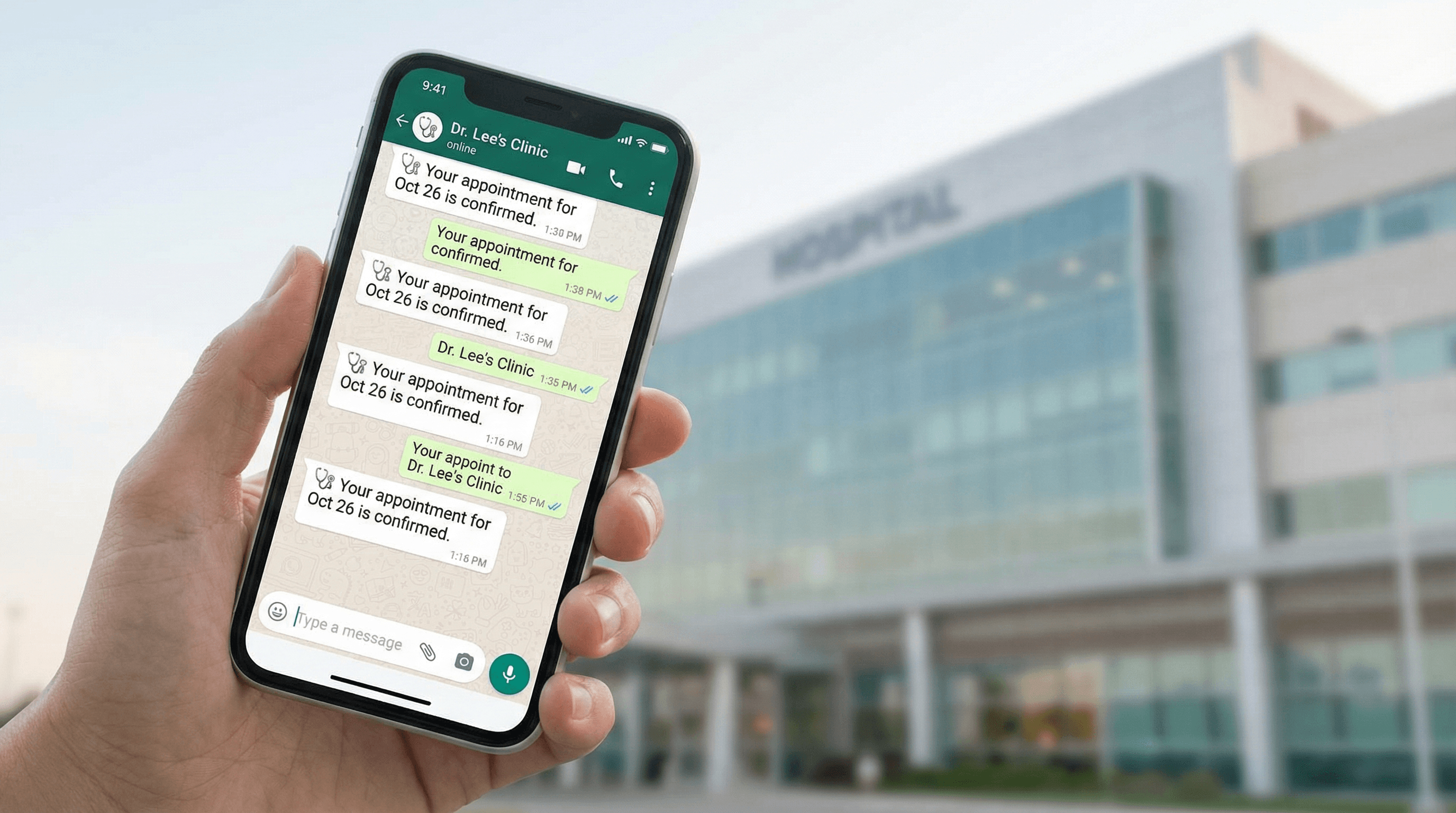
WhatsApp healthcare chatbot for patient engagement

WhatsApp Healthcare Automation: Transform Patient Engagement in 2026

Mrs. Lim had been dreading this call all week. Her elderly mother needed to reschedule a specialist appointment, which meant calling the hospital, navigating the phone menu, waiting on hold, and hoping they had an available slot. She braced herself for the 20-minute ordeal.

Then she remembered: the hospital had started using WhatsApp.

She typed a quick message at 9 PM while watching TV. Within seconds, a friendly response appeared. Three messages later, her mother's appointment was rescheduled, confirmed, and added to her calendar. Total time: 90 seconds.

"I actually said 'wow' out loud," she told her friends later. "Why isn't every hospital doing this?"

That's the question transforming healthcare across Asia.

The WhatsApp Revolution in Healthcare

Here's a truth that shouldn't surprise anyone: your patients are already on WhatsApp. In Singapore, 84% of the population uses it daily. In the Philippines, it's Viber. In Malaysia, WhatsApp dominates. The question isn't whether to meet patients there—it's why you haven't already.

The numbers tell a compelling story:

How Patients RespondWhatsAppEmailPhone
Open rate95%20%70%
Response rate45%5%60%
SatisfactionVery HighLowDeclining

When Gleneagles Hospital switched their appointment reminders from phone calls to WhatsApp, their no-show rate dropped by 30% in the first month. Not because patients suddenly became more responsible—because they finally saw the reminders.

A Day in the Life: How WhatsApp Changes Everything

Let me walk you through what AI-powered WhatsApp automation looks like in practice:

7:23 AM - Mr. Ahmad receives a gentle reminder about his cardiology appointment tomorrow. The message includes what to bring, where to park, and a one-tap button to confirm or reschedule.

9:45 AM - A new patient, Sarah, messages asking about fertility treatment options. The AI provides helpful information, answers her questions about the process, and offers to schedule a consultation—all before the receptionist finishes their morning coffee.

2:15 PM - Lab results are ready for Mrs. Wong. Instead of waiting for a phone call that never seems to come at a convenient time, she receives a secure WhatsApp notification. She downloads her results instantly and books a follow-up appointment to discuss them with her doctor.

8:47 PM - A worried father messages about his daughter's post-surgery symptoms. The AI asks the right questions, determines it's not urgent, provides reassurance and care instructions, but flags the conversation for a nurse to review first thing in the morning.

11:30 PM - Someone browsing the hospital website decides to book an appointment. Instead of waiting until morning, they start a WhatsApp conversation and have their slot confirmed before they go to sleep.

This isn't science fiction. This is happening right now at hospitals across Southeast Asia.

The Real Stories Behind the Statistics

Parkway Hospital's Transformation

When Parkway implemented WhatsApp automation, their Patient Experience Director was skeptical. "We'd invested heavily in our call center," she admits. "I wondered if patients would actually use messaging."

Six months later:

  • Call center volume dropped 70%
  • Patient satisfaction scores increased 25%
  • Staff could handle 3x more inquiries in the same time
  • After-hours booking revenue increased by $180,000 annually

"The call center staff were worried about job security," she says. "But now they handle complex cases while the AI handles routine queries. They're happier. Patients are happier. Everyone wins."

The Medication Adherence Miracle

At a diabetes clinic in Kuala Lumpur, medication adherence was a persistent problem. Patients would forget doses, miss refills, and show up with preventable complications.

They implemented a simple WhatsApp reminder system: friendly daily messages at medication time, weekly check-ins, and automatic refill reminders.

The results shocked even the optimists:

  • Medication adherence improved 40%
  • HbA1c levels improved across the patient population
  • Emergency visits decreased 22%
  • Patient satisfaction scores reached all-time highs

"It's not complicated technology," the clinic director explains. "It's meeting patients where they already are and making the right thing to do the easy thing to do."

Beyond Reminders: The Full Picture

Most hospitals start with appointment reminders—it's the quickest win. But the real transformation happens when you expand:

Pre-Admission Automation

The night before surgery used to be stressful for patients. Did they remember all the instructions? What time should they arrive? What can they eat?

Now, AI sends a personalized preparation sequence:

  • 7 days before: Overview and preparation checklist
  • 3 days before: Detailed instructions (fasting, medications)
  • 1 day before: Final reminders with arrival time and location
  • Morning of: Encouraging message with parking directions

One surgical center saw pre-operative compliance jump to 95%. Fewer cancelled surgeries. Fewer delays. Happier patients and surgeons.

Post-Discharge Care

Here's where WhatsApp automation saves lives.

When Mr. Chen was discharged after heart surgery, he received automated check-ins asking about his recovery, symptoms, and medication. On day 3, he reported unusual swelling. The AI recognized this as a potential concern and immediately alerted the cardiac care team.

A nurse called within 10 minutes. Mr. Chen was back in the hospital two hours later with a complication that could have been life-threatening if caught later.

"The WhatsApp system probably saved his life," his cardiologist said. "By day 3, most patients have lost our discharge instructions. But the AI doesn't forget to check in."

Making It Work: The Practical Guide

Ready to implement? Here's what you actually need to know:

Getting Access

WhatsApp Business API isn't something you can download from an app store. You need:

  • A verified business account (Meta reviews healthcare accounts carefully)
  • A Business Solution Provider (BSP) partnership
  • Healthcare-compliant infrastructure
  • Integration with your hospital systems

This is why most hospitals partner with platforms like Bot MD rather than building from scratch. The regulatory and technical requirements are significant.

Integration is Everything

A standalone WhatsApp chatbot is just a fancy FAQ. The magic happens when it connects to:

  • Your scheduling system (real-time availability)
  • Patient records (personalized communication)
  • Clinical workflows (proper escalation)
  • Analytics (continuous improvement)

When a patient messages "I need to see my cardiologist," the AI should already know who their cardiologist is, when they were last seen, and what slots are available. That requires integration.

Conversation Design Matters

Healthcare isn't like e-commerce. The tone, the safety considerations, the escalation paths—everything needs to be designed with clinical input.

Great healthcare conversations:

  • Feel empathetic, not robotic
  • Know when to escalate to humans
  • Never give medical advice (direct to clinicians instead)
  • Support multiple languages naturally
  • Respect patient privacy and preferences

Compliance Isn't Optional

WhatsApp's end-to-end encryption is a good start, but healthcare compliance requires more:

  • Proper consent management
  • Audit trails for all communications
  • Data residency considerations
  • Role-based access controls
  • Regular security assessments

Any platform you choose must understand HIPAA, PDPA, and other regional requirements deeply.

The Numbers That Matter

Let's talk ROI in concrete terms:

Revenue Impact

  • Average hospital with 100,000 appointments/year
  • Current no-show rate: 20% (20,000 no-shows)
  • Average appointment value: $150
  • Current loss: $3,000,000 annually

After WhatsApp automation:

  • New no-show rate: 14% (30% reduction)
  • Saved appointments: 6,000
  • Recovered revenue: $900,000 annually

Cost Savings

  • Call center cost per interaction: $4.50
  • WhatsApp AI cost per interaction: $0.30
  • Annual call volume: 200,000
  • Portion handled by AI: 70%
  • Annual savings: $588,000

Combined ROI: Nearly $1.5 million annually for a mid-sized hospital.

The Future is Already Here

The hospitals implementing WhatsApp automation today aren't just solving current problems—they're preparing for what's next:

Voice Integration: AI that handles phone calls with the same intelligence as chat

Predictive Outreach: Systems that identify at-risk patients before they miss appointments

Integrated Care Journeys: End-to-end automation from first inquiry through ongoing care

Multilingual AI: Natural conversations in any language, not just translated scripts

Your Move

The question every hospital leader should ask: "What is it costing us to NOT be available on WhatsApp?"

Every unanswered after-hours inquiry. Every patient who got tired of waiting on hold. Every no-show that a simple reminder could have prevented. Every medication dose missed because the reminder never came.

These aren't hypothetical costs. They're happening every day at hospitals that haven't made the shift.

Bot MD's WhatsApp automation platform is trusted by leading healthcare organizations across Singapore, Malaysia, Philippines, and beyond. We've helped hospitals:

  • Reduce no-shows by 30%+
  • Cut call center volume by 70%
  • Achieve 83% appointment conversion from inquiries
  • Deploy in 4-8 weeks, not months

The technology exists. The patient demand is clear. The ROI is proven.

Book a demo and see WhatsApp healthcare automation in action.

Ready to Transform Your Patient Engagement?

See how Bot MD can help your hospital achieve similar results with AI-powered patient engagement.

Related Articles
Ready to boost your hospital revenue?

Book a demo to learn how we can help you automate your patient engagement to increase revenue by 20-30%